
🐾
🐾
🐾
🐾
🐾
🐾
When you bring a new pet home, you track the big things — vaccinations, food, sleep, playtime. Hydration tends to slip through the cracks, not because people don’t care, but because it doesn’t announce itself the way other problems do. A dog won’t limp when she’s mildly dehydrated. A cat won’t cry. Things quietly go wrong in the background, and by the time you notice, the issue has often been building for days. Understanding what good water intake actually looks like for your specific pet — and knowing what to do when it falls short — is one of the most genuinely useful things you can learn early on.

The Owner Who Assumed Her Cat Was Fine
Here’s a situation that plays out constantly: someone adopts a cat, notices she never seems to rush to the water bowl, and figures that means she’s simply not very thirsty. The cat eats her dry kibble, acts normally, and nothing seems wrong. Months later, at a routine vet visit, they learn the cat has been mildly but chronically under-hydrated, and her kidneys have been working harder than they should as a result.
This isn’t a story of neglect — it’s a story of biology that most people were never taught. Cats evolved in arid environments and descended from desert-dwelling ancestors who got the vast majority of their water not from drinking, but from eating prey. A freshly caught mouse is roughly 70% water. Dry kibble is typically somewhere around 10%. That gap is enormous, and a cat’s thirst drive simply wasn’t built to compensate for it reliably. They don’t feel urgently thirsty the way a dog does after a run. They’ll go hours — sometimes an entire day — without touching their bowl, and they won’t appear distressed while doing it.
Dogs have a stronger thirst reflex, but that doesn’t mean they’re immune to dehydration. They lose water through panting, exercise, heat, and illness. A dog who’s been playing outside on a warm afternoon or who has a mild stomach upset is burning through fluids faster than you might expect.
How to Tell If Your Pet Isn’t Drinking Enough
You don’t need to measure every milliliter your pet drinks. But you should know the physical signs that something is off, because catching this early makes a real difference.
Signs to watch for in both cats and dogs
Check your pet’s gums. In a healthy, well-hydrated animal, gums should be moist and slick to the touch. If they feel tacky, dry, or sticky, that’s a warning sign. Pale or greyish gum color alongside dryness warrants a vet call, not just a bowl refill.
Look at the eyes. Sunken or dull-looking eyes, particularly in combination with other signs, can indicate the body is pulling fluid from wherever it can find it.
Watch for lethargy that isn’t explained by heat or a long play session. A dog who would normally bound over to greet you and instead stays lying down, or a cat who skips her usual routine without obvious reason, may be telling you something.
The skin tent test for dogs
Gently pinch a small fold of skin at the back of your dog’s neck or between the shoulder blades, then release it. In a well-hydrated dog, the skin snaps back immediately. If it holds the fold or returns slowly — even for a second or two longer than it should — that tent shape is a sign of dehydration. This test is less reliable in older dogs with naturally less elastic skin, but in younger and middle-aged dogs it’s a useful quick check. It’s less definitive in cats, so with them, the gum check matters more.
Practical Ways to Help Your Pet Drink More
Wet food makes a real difference, especially for cats
Because cats aren’t wired to compensate for dry food by drinking more water, switching even one meal a day to wet food can meaningfully improve their overall fluid intake. If budget or preference means you’re sticking primarily with dry food, adding a small amount of warm water to the bowl is a simple workaround that many cats accept without complaint.
For dogs, wet food or a mix of wet and dry adds moisture without requiring much extra effort. Dogs tend to be enthusiastic about it either way.
Multiple water bowls in multiple spots
Pets — cats especially — are more likely to drink if water is simply nearby when they happen to pass through a room. One bowl in the kitchen isn’t always enough. Put a bowl in the hallway, one near where they sleep, and one in any room where they spend significant time. The less effort it takes to find water, the more water gets consumed. Keep the bowls away from the food bowl if possible; cats in particular often prefer not to drink right next to where they eat.
Water fountains for cats (and dogs who like moving water)
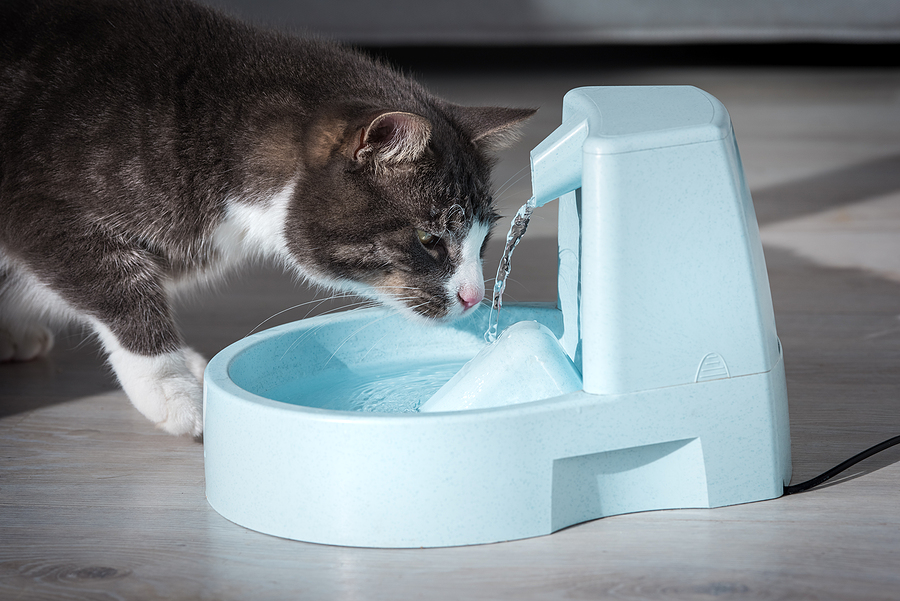
Cats are drawn to running water — again, it comes back to instinct. Moving water in the wild is fresher and safer than stagnant water, and that preference is baked in. A pet water fountain with a continuous flow or dripping stream can dramatically increase how often a cat drinks. Some cats who barely glance at a standing bowl will visit a fountain repeatedly throughout the day. It’s one of the more genuinely impactful changes you can make for a cat who doesn’t drink much.
Keep the water fresh and the bowl clean
Change the water at least once a day. Wash the bowl with soap and water every two to three days — bacteria and biofilm build up quickly, and many animals can smell it even when you can’t. Stainless steel or ceramic bowls are easier to keep clean than plastic, which holds onto odors and scratches over time.
Ice cubes in summer
On warm days, dropping a few plain ice cubes into the water bowl adds a novelty factor that often gets pets drinking. Dogs especially tend to investigate and lap at ice with interest. It also keeps the water cooler for longer, which is a genuine draw on hot afternoons.
Plain broth as an occasional boost for dogs
If your dog is recovering from illness, has been very active, or just seems reluctant to drink, a small amount of plain, low-sodium broth — with absolutely no onion or garlic in any form — can encourage fluid intake. It’s not something you need every day, but as an occasional tool when you want to give hydration a little push, it works well. Check the label carefully; many store-bought broths contain onion powder, which is toxic to dogs.
When to Call the Vet
Home monitoring is appropriate for mild signs noticed early — tacky gums after a hot afternoon, a dog who drank less than usual. It’s not appropriate if your pet has been vomiting or has had diarrhea for more than 24 hours, since both cause rapid fluid loss that a bowl of water won’t fix. It’s also not appropriate if your pet won’t drink at all, seems disoriented or unusually weak, or if the skin tent stays elevated for more than a couple of seconds. These are signs that the body is already struggling, and oral water intake at that point may not be sufficient. A vet may need to provide fluids by another route.
Kittens and puppies dehydrate faster than adult animals, so the bar for calling your vet should be lower with young pets. If in doubt, call — describing what you’re seeing over the phone takes five minutes and gives you real guidance.
Quick Hydration Facts (Tap to Reveal)
Your pet cannot tell you they’re thirsty. They can’t point at their bowl or explain that they’ve been feeling off for the past two days. All they can do is show you, through small physical signs and behavioral shifts that are easy to miss if you’re not looking. Paying attention to hydration — building it into the everyday rhythm of caring for your pet rather than treating it as an afterthought — is one of the quietest and most meaningful things you can do for their long-term health. A full water bowl, changed daily, placed somewhere convenient, goes further than you might expect.